Lexington Regional Service Areas

Comprehensive emergency roofing triage and dispatch across Fayette County and the Central Kentucky Bluegrass region.
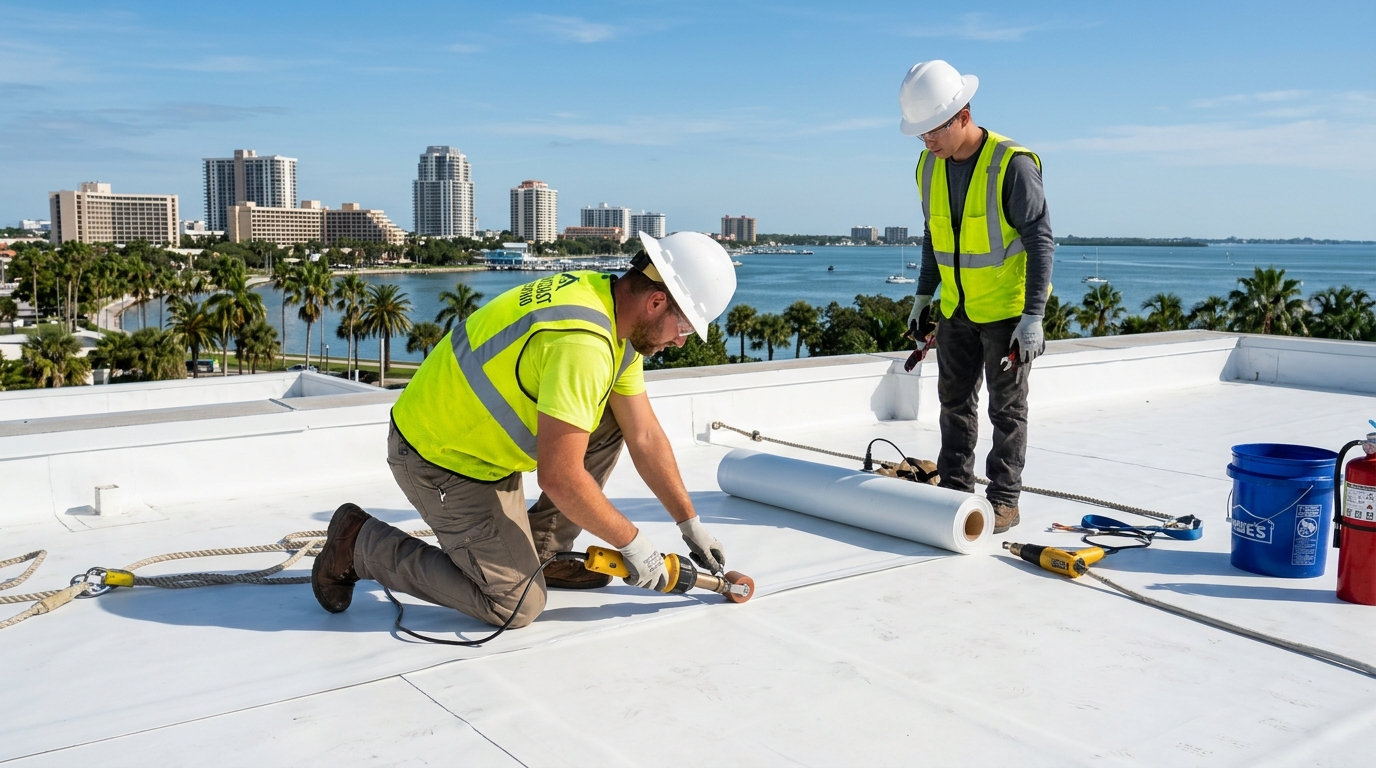
Roof Expert USA provides comprehensive storm damage roofing triage and emergency dispatch throughout the entire Lexington metropolitan area and surrounding Central Kentucky Bluegrass communities. Whether your property is located in suburban Fayette County neighborhoods, on historic thoroughbred horse farms along Iron Works Pike, or in surrounding hubs like Georgetown, Nicholasville, Richmond, and Winchester, our emergency coordination network routes licensed local roofing crews directly to your doorstep.

Regional Geographic Service Coverage

Central Kentucky's open landscape spans multiple counties across the Inner Bluegrass region. Storms tracking across the Ohio Valley create severe localized damage patterns, from straight-line wind gusts in open paddocks to heavy hail bruising along suburban roof slopes. Our network coordinates emergency tarping, missing shingle repairs, and water containment across all key regional hubs:

Georgetown & Scott County

Serving residential subdivisions, historic downtown neighborhoods, and industrial corridors along I-75 and Cherry Blossom Way. Rapid dispatch for hail claims, torn architectural shingles, and gutter overflows.

Georgetown Repair Protocols →

Nicholasville & Jessamine County

Connecting homeowners with licensed contractors for wind-lifted shingles, chimney flashing leaks, and active water containment along US-27 and Brannon Crossing.

Nicholasville Protocols →

Richmond & Madison County

Serving residential communities near Eastern Kentucky University and along the I-75 corridor requiring fast timber-batten tarping, attic leak mitigation, and storm damage repairs.

Richmond Tarping Protocols →

Winchester & Clark County

Established neighborhoods near downtown Winchester and rural properties along Mountain Parkway experiencing torrential rain overflows, deteriorated pipe boots, and flashing leaks.

Winchester Leak Protocols →

Versailles & Woodford County

Historic architectural homes and world-renowned thoroughbred horse breeding farms requiring high-wind shingle repair, copper valley flashings, and barn roof stabilization.

Versailles Dispatch →

Paris & Bourbon County

Equestrian barn roofs, residential shingle replacements, and agricultural standing seam metal leak mitigation across the northern Bluegrass plain.

Paris Dispatch →

Zero Form Delays: Direct Phone Dispatch Across All Locations

When water is actively leaking into your ceiling or Bluegrass winds have peeled shingles off your decking, filling out web forms and waiting for callbacks puts your home at severe risk. Our central intake dispatch line operates 24 hours a day, 365 days a year. Call (888) 208-4155 now to speak directly with an intake specialist who will route the closest licensed crew to your location.

Frequently Asked Questions

What counties do your dispatched roofing crews cover? +

Our referral network primarily serves Fayette County, Scott County, Jessamine County, Madison County, Clark County, Woodford County, and Bourbon County in the greater Central Kentucky Bluegrass region.

Is emergency dispatch response time the same in surrounding communities like Georgetown and Richmond? +

Our coordination desk routes requests to contractors strategically stationed across major transportation corridors (I-75, I-64, New Circle Road) to ensure rapid response times across all served communities.

Do dispatched contractors work with local municipal building departments? +

Yes. All independent contractors in our network are registered in Kentucky and comply with local municipal building codes, permitting requirements, and inspections in Lexington, Georgetown, Nicholasville, and Richmond.

Fayette County & Bluegrass Technical Engineering

Bluegrass Severe Storm Dynamics & Structural Mitigation Protocols

The rolling topography of the Kentucky Bluegrass basin exposes residential structures, estate homes, and equestrian horse farms to volatile meteorological forces. Understanding these technical dynamics prevents recurring structural water damage.

1. Bluegrass Wind Shear & Equestrian-Residential Microclimates

Lexington and the surrounding Bluegrass region occupy an open karst plain surrounded by low rolling hills. Unlike heavily forested mountain terrain that breaks up surface airflow, the open pastures, equestrian paddocks, and expansive residential subdivisions of Fayette, Scott, and Jessamine counties offer minimal friction to fast-moving convective weather systems. When cold fronts descend from the Ohio Valley and collide with warm, moisture-laden air masses pushing north from the Gulf of Mexico, the resulting squall lines produce severe straight-line wind gusts frequently exceeding 60 to 75 miles per hour.

These sudden wind bursts create intense negative aerodynamic pressure along roof eaves, rakes, and ridge lines. On residential properties and horse farm barn structures, wind catches the underside of asphalt shingles whose thermal sealant strips have grown brittle from seasonal temperature swings. Once the starter course or perimeter shingles delaminate, wind shear peels subsequent courses in sheets, leaving the underlying roof decking completely vulnerable to wind-driven cloudburst rains.

2. Non-Destructive Moisture Tracing & FLIR Thermal Diagnostics

A frequent challenge during Lexington storm leaks is that water rarely drips into the living space directly below the exterior roof puncture. Rainwater penetrating a breached shingle lap, compromised chimney counterflashing, or damaged pipe boot travels along roof rafters, follows horizontal electrical wiring conduits, and pools on vapor barriers before finding an opening in ceiling drywall.

Contractors dispatched through our referral network utilize professional FLIR (Forward Looking Infrared) thermographic cameras and electronic moisture pin meters. Because wet insulation materials retain cooler thermal mass during daytime warming and warmer mass during nocturnal cooling, high-resolution infrared imaging reveals the exact subterranean migration path of water. This enables technicians to target exterior repairs with pinpoint accuracy without performing unnecessary exploratory demolition on interior ceilings.

3. Step-by-Step Deck Restoration & Elastomeric Sealing

When wind or falling hardwood limbs breach roof sheathing, proper restoration requires structured mechanical engineering rather than surface mastic patching. Dispatched contractors execute a disciplined multi-stage protocol:

  • Substrate Extraction: Compromised, water-saturated, or delaminated OSB/plywood sheathing is cleanly cut back to the center of adjacent load-bearing rafters.
  • Framing Reinforcement: Rafter chords are inspected for deflection or fracture and reinforced with sister framing lumber where necessary.
  • Structural Sheathing Replacement: New CDX exterior-grade plywood or OSB matching the original deck thickness is securely fastened using 8d ring-shank nails spaced at 6 inches on center along edges.
  • Self-Adhering Membrane Shield: A continuous layer of polymer-modified bitumen ice-and-water shield is rolled across the repaired deck, self-sealing around all mechanical fastener penetrations.
  • Interlocking Shingle Re-Integration: High-wind Class 4 impact architectural shingles matching the existing slope are interwoven with surrounding courses, hand-sealed with commercial-grade elastomeric asphalt cement.

4. Kentucky Building Code & Contractor Licensing Compliance

Permanent residential and commercial roofing restorations throughout Lexington and Fayette County must strictly comply with the adopted Kentucky Residential Code (KRC) and International Building Code (IBC) standards. Key provisions dictate that all replacement shingles must achieve minimum ASTM D3161 Class F or ASTM D7158 Class H wind uplift ratings, ensuring resistance against 110 to 130 mph gusts.

Furthermore, state and local regulations require approved ice barrier membranes along all eaves, valleys, and wall intersections extending at least 24 inches inside the interior heated wall line. Independent roofing contractors in our referral network maintain active registration with the Kentucky Secretary of State, carry comprehensive general liability and workers' compensation coverage, and coordinate required local municipal building permits for structural re-decking.

5. Preventative Horse Farm & Residential Storm Preparedness

Preserving roof longevity across Central Kentucky requires proactive inspection routines before the onset of spring severe convective storm cycles and winter freeze-thaw periods. Residential and equestrian facility owners should conduct bi-annual ground-level binocular audits:

  • Overhanging Canopy Clearance: Mature oak, maple, and walnut branches within 10 feet of roof planes must be pruned back to eliminate branch impact punctures during sudden downbursts.
  • Penetration Collar Inspection: Inspect rubber plumbing boot flashings; intense summer UV exposure degrades neoprene within 6 to 8 years, creating hairline cracks that leak during high-intensity rain.
  • Masonry Chimney Reglet Integrity: Check chimney counterflashing mortar grooves; freeze-thaw cycles common in Kentucky winters pop mortar seals, allowing driving rain behind step flashings.
  • Gutter & Downspout Debris Flushing: Clear pine needle and leaf blockages to prevent torrential rain overflows from backing up beneath eave drip edges and rotting fascias.
CALL NOW — (888) 208‑4155